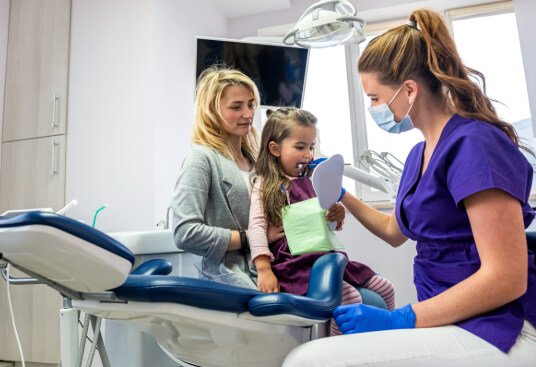
You notice it in old family photos, then at holidays, then when someone mentions a cracked molar or a chipped front tooth at a family dental office in Riverview. A parent has flat edges on their teeth. A sibling has the same worn spots. Now you are seeing it in your own mouth or your child’s. That pattern can feel unsettling, especially when it seems too similar to be random.
When several relatives have the same kind of wear, a family dentist does not just look at the teeth in isolation. They look for patterns in bite alignment, grinding, clenching, enamel strength, jaw habits, sleep issues, acid exposure, and family history. Some causes run in families because of shared genetics. Others show up because relatives share routines, stress patterns, diet, or sleep habits. A family dentist pieces those clues together so the damage does not keep building year after year.
Family tooth wear often points to more than one cause
Tooth wear usually looks simple from the outside. Teeth seem shorter, flatter, more sensitive, or more likely to chip. Underneath, the reason is often layered. One person may grind at night. Another may have a bite that puts extra force on certain teeth. A third may have acid reflux that softens enamel before grinding wears it down faster.
That is why a dentist pays close attention when the same pattern appears across generations. If a parent and child both have heavy wear on the back teeth, the dentist may check how the jaws come together, whether there is crowding, and whether the enamel looks naturally thin or weak. If several relatives report morning jaw soreness, headaches, or broken fillings, bruxism moves higher on the list. The National Institutes of Health explains that bruxism, or tooth grinding, can happen during sleep or while awake, and many people do not realize they are doing it.
You may already know how this goes in real life. One person gets a night guard. Another keeps replacing cracked dental work. Someone else says, “Everyone in our family has bad teeth,” when the issue may actually be a shared pattern that can be treated. That difference matters. “Bad teeth” sounds fixed. Bite stress, grinding, acid erosion, and enamel defects can often be managed before they become expensive.
See also: How Chronic Hemorrhoids Treatment Can Improve Quality of Life
Shared dental wear can come from genetics, habits, and bite mechanics
Some families do have inherited traits that affect tooth wear. Enamel thickness and quality can vary. Jaw shape and tooth alignment often run in families too. If several relatives have deep bites, crossbites, or crowding, the teeth may hit in ways that create repeated stress on the same surfaces. Over time, those contact points flatten or fracture.
Shared habits add another layer. Families often eat similar foods, drink the same acidic beverages, or have similar routines around sleep and stress. A household that relies on sports drinks, citrus water, or frequent snacking may see more enamel softening. A family under constant stress may clench during the day without noticing it. Someone who works at a computer may hold tension in the jaw for hours. A child may copy that tension pattern long before anyone connects it to tooth wear.
A dentist also considers medical factors that can cluster within families. Sleep breathing problems, reflux, anxiety, and some medications can all raise the risk of grinding or enamel damage. The National Institute of Dental and Craniofacial Research notes in its expert Q&A on bruxism and tooth grinding that stress, sleep disorders, and other health issues may play a role. When several relatives show similar wear, those connections become harder to ignore.
What a family dental exam looks for when wear patterns repeat
A good exam goes beyond “you grind your teeth.” The dentist studies where the wear is, how fast it seems to be progressing, and whether the damage matches the story you tell. Flat chewing surfaces suggest one kind of force. Small chips along front teeth suggest another. Cupped areas on the enamel may point more toward acid erosion. Sensitive teeth near the gumline can signal brushing habits, bite stress, or both.
The dentist may ask when symptoms are worse, whether you wake with jaw pain, whether anyone snores, whether there is reflux, and whether relatives have needed crowns early in life. Photos, X rays, and bite checks help show whether the wear is active or old. If one teenager in the family already has the same wear seen in a parent at age fifty, that tells the dentist the process may be starting early and deserves attention now.
Practical signs dentists compare when several relatives have similar tooth wear
| Pattern or Sign | What a Dentist May Suspect | Common Next Step |
|---|---|---|
| Flat, shiny wear on back teeth in several relatives | Night grinding, clenching, or bite imbalance | Bite evaluation, night guard, monitoring for cracks |
| Chipped front teeth shared by parent and child | Edge to edge bite, daytime clenching, sports trauma | Occlusion check, habit review, protective options |
| Short teeth with sensitivity across generations | Thin enamel, inherited enamel weakness, heavy wear | Enamel assessment, fluoride support, restoration plan |
| Cupped enamel and widespread smooth wear | Acid erosion from diet or reflux | Diet review, medical referral if needed, enamel protection |
| Frequent broken fillings or crowns in the family | High bite forces or untreated bruxism | Force management, material review, bite adjustment when appropriate |
This is where what family dentists look for when several relatives have similar tooth wear becomes practical. They are not searching for one perfect answer. They are sorting out which forces are most damaging, which risks are inherited, and which habits can change now.
Small early steps can prevent major dental work later
When wear is ignored, it tends to get expensive quietly. Teeth lose height little by little. Fillings stop fitting the bite well. Cracks deepen. Sensitivity becomes normal, until one day a tooth needs a crown, root canal, or extraction. That is why similar tooth wear in families deserves attention even when nobody is in pain yet.
A family focused approach also helps children. If a dentist knows grandparents and parents both had heavy wear early, a child can be watched more closely for bite problems, grinding, or enamel defects. That does not mean something is wrong. It means the pattern is known, and known patterns are easier to manage than surprises.
Three steps you can take right away
1. Gather the family pattern. Make a quick list of relatives with worn, chipped, sensitive, or heavily restored teeth. Include grinding, jaw pain, reflux, snoring, and early crowns if you know about them. That history gives a dentist useful context fast.
2. Track your own signs for two weeks. Notice morning headaches, jaw tightness, cheek biting, sensitivity to cold, or times you catch yourself clenching. If a child grinds at night, mention it. These details help connect wear to real daily habits and sleep patterns.
3. Schedule a dental exam focused on wear, not just cleaning. Ask for a bite evaluation and a review of whether the pattern suggests grinding, erosion, alignment issues, or enamel weakness. A general dentist or family dental provider can often spot risks before major damage sets in.
If several people in your family seem to have the same worn down teeth, you are not overreacting by paying attention. Patterns mean something. They give a family dentist a starting point, and they give you a chance to protect your teeth before small signs become big repairs. If you have noticed the same wear across parents, siblings, or children, schedule a visit and ask for a closer look at the pattern.