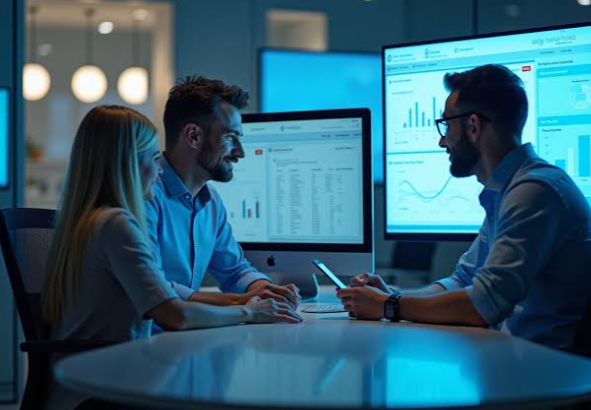
You already have enough on your plate. Payroll is due, tax deadlines keep moving closer, expenses need to be tracked, and one wrong number can create a mess that takes months to fix. A lot of business owners still picture a Certified Public Accountant as the person who shows up at tax time, asks for a stack of documents, and disappears again. That picture is outdated, especially when working with a CPA in Manhattan.
Modern accounting support looks different because your problems look different. You need faster answers, cleaner records, stronger security, and advice that helps you make decisions before a problem turns expensive. The best modern CPA innovations are not flashy extras. They are practical tools and services that save time, reduce risk, and give you a clearer view of where your business stands.
Modern certified public accountants use real time financial systems
One of the biggest changes is the shift from backward looking bookkeeping to real time reporting. In the past, many clients waited until the end of the month, quarter, or year to understand cash flow, profit, or tax exposure. By then, the damage was often done. You might have overspent, underpaid estimated taxes, or missed a trend that was already hurting your margins.
Modern CPAs use cloud based accounting platforms, bank feeds, and live dashboards to keep your numbers current. That means you can see where money is going while decisions still matter. If payroll costs jump or receivables start lagging, you learn that now, not after the quarter closes.
This changes the relationship. A Certified Public Accountant is no longer just preparing reports. They are helping you run a business with current information. That is one of the clearest advances CPAs offer clients, because speed changes the quality of every decision tied to hiring, inventory, pricing, and taxes.
Automation reduces errors and frees up time for strategy
Manual entry drains time and creates risk. A duplicated invoice, a missed receipt, or a coding error can ripple through your books and affect tax filings, vendor payments, and financial statements. If you have ever spent hours trying to track down why two reports do not match, you know how quickly a small mistake becomes a costly one.
Modern CPAs bring automation into accounts payable, expense tracking, reconciliations, and document collection. This is not about replacing judgment. It is about removing repetitive work so the human attention goes where it belongs.
That matters because clients do not just need cleaner books. They need interpretation. If software flags unusual spending patterns or late payments, your CPA can step in with advice instead of spending that same hour entering data by hand. The result is fewer preventable mistakes and more time spent on planning, forecasting, and compliance.
Small business owners can also benefit from federal guidance built for growing operations. The IRS offers tools for business owners and entrepreneurs that support recordkeeping, tax planning, and general financial organization. A CPA can help you apply those resources in a way that fits your actual workflow.
Cybersecurity is now part of modern accounting service
Financial data has always been sensitive, but the risk is broader now. Tax IDs, payroll records, bank details, and vendor information all move through digital systems. If one weak password or unsecured portal exposes that data, the fallout can hit your finances, your reputation, and your legal obligations at the same time.
That is why one of the most useful new CPA services is tighter coordination around cybersecurity. A modern accounting firm may use secure document portals, access controls, encrypted file sharing, and fraud monitoring as part of normal client service. This is not paranoia. It is basic protection for the information criminals want most.
If you are building a more secure internal process, the National Institute of Standards and Technology provides guidance on building your team for small business cybersecurity. A CPA often becomes part of that team because financial systems are one of the first places fraud and breaches show up.
Advisory services help clients plan instead of react
Tax filing still matters. Compliance still matters. What clients want now, and what strong firms increasingly provide, is advisory support that connects the numbers to the next move. You may be wondering whether to hire, buy equipment, change your entity structure, or expand. Those decisions have tax effects, cash flow effects, and reporting effects that do not show up clearly if your accountant only looks backward.
Modern CPAs model scenarios. They estimate tax impact before year end. They help clients understand whether growth is actually profitable or just expensive. They can also spot patterns that are easy to miss when you are buried in day to day operations.
This is where a basic accounting service becomes a business asset. A root level Certified Public Accountant service still includes compliance, but the stronger value often comes from planning early enough to change the outcome.
DIY accounting and modern CPA support produce very different outcomes
| Area | DIY or Traditional Reactive Approach | Modern CPA Approach |
|---|---|---|
| Financial visibility | Reports reviewed monthly or only at tax time | Real time dashboards and current reporting |
| Error control | Manual entry and delayed corrections | Automation, reconciliations, and early issue detection |
| Tax planning | Last minute filing with fewer options | Year round planning and estimated tax review |
| Security | Email attachments and inconsistent access controls | Secure portals, permissions, and data handling practices |
| Business decisions | Choices based on instinct or incomplete numbers | Scenario planning backed by current financial data |
Three steps you can take right away
Review how current your numbers really are. If your books are always two or three weeks behind, you are making decisions with stale information. Check how quickly income, expenses, payroll, and receivables are updated.
Map the weak points in your process. Look for places where paper receipts pile up, invoices are entered by hand, or sensitive files get emailed around. Those are the areas where modern accounting tools and better controls can reduce risk fast.
Ask for advisory support, not just tax prep. If your accountant only contacts you near filing deadlines, ask whether they provide forecasting, tax planning, or cash flow review during the year. That is often where the strongest value shows up.
You do not need more noise. You need cleaner systems, safer data, and advice you can use before a problem gets expensive. That is what these four innovations bring to clients, and it is why the role of the CPA has changed so much. If you are ready for accounting support that helps you stay organized, protected, and prepared, reach out and start the conversation.