You finally get to the point where your dental implant is ready for the crown, and then a new choice shows up. Screw retained or cement retained. If that feels oddly stressful, you are not overreacting. Most people assume the hard part was deciding on the implant itself, then they learn the final crown design can affect how the tooth looks, how it is maintained, and how easy it is to fix later. If you are working with an implant dentist in Merced, CA, understanding these options can help you feel more confident about the final decision.
The short version is simple. Both options can work well. A screw retained implant crown attaches directly with a screw and can usually be removed more easily by your dentist if something needs repair. A cement retained implant crown is bonded in place with dental cement and may offer certain cosmetic or fit advantages in some cases, but excess cement can create problems around the implant if it is not carefully managed. Research on implant crown retention methods and a review of complications in implant restorations both point to the same idea. The best choice depends on your bite, implant position, gum tissue, and long term maintenance needs.
Screw retained and cement retained implant crowns solve different problems
A crown on a dental implant is the visible tooth part. The implant itself sits in the bone, and the crown has to attach to it somehow. That attachment method is where this decision starts.
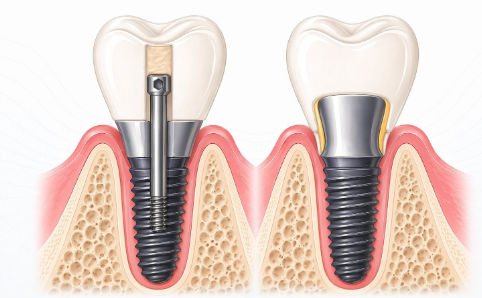
With a screw retained crown, the crown is secured with a small screw through an access channel. Your dentist places the crown, tightens the screw, and seals the access hole with filling material. The biggest strength is retrievability. If the crown loosens, chips, or needs adjustment, your dentist can often remove it without destroying it.
With a cement retained crown, the crown is luted onto an abutment with dental cement, more like a traditional crown on a natural tooth. This can be useful when the implant angle would place a screw access hole in a spot that affects appearance or function. In some mouths, that matters a lot, especially for front teeth where every detail shows.
The stress comes from the tradeoff. You want something that looks natural and feels stable, but you also want to avoid future trouble. If you grind your teeth, have a heavy bite, or know you want the simplest repair path, that can push the decision one way. If implant positioning or esthetics are the bigger issue, that can push it the other way.
The main difference in implant crown types is maintenance over time
People often focus on the day the crown goes in. Dentists also think about the years after that. That is where the difference between these implant crown types becomes more personal.
A screw retained design often makes maintenance easier. If the crown needs to come off for cleaning, repair, or access to the implant parts, your dentist can usually retrieve it. That matters more than most patients expect. A tiny porcelain chip, a loose component, or gum irritation around the implant can turn into a larger problem if the crown is difficult to remove.
A cement retained design can be very successful too, but the weak point is excess cement left under the gumline. You cannot see it, and sometimes it does not cause symptoms right away. Later, it can irritate the tissue or contribute to inflammation around the implant. That is one reason careful technique matters so much with this style.
This is also where cost can get confusing. The crown that seems simpler at delivery is not always simpler later. A restoration that is hard to retrieve may mean more chair time, more work, or even remaking the crown if a problem develops underneath it.
Practical differences between screw retained and cement retained implant crowns
| Factor | Screw Retained Crown | Cement Retained Crown |
| How it attaches | Secured with a screw to the implant or abutment | Bonded with dental cement over an abutment |
| Ease of removal | Usually easier to retrieve for repair or maintenance | Often harder to remove without damage |
| Risk concerns | Screw loosening or access hole placement | Residual cement under the gums |
| Cosmetic concerns | Access hole may affect appearance in some positions | No visible access hole on the crown surface |
| Best fit for | Cases needing retrievability and easier long term service | Cases where implant angle or esthetics favor cementation |
Real life examples make this easier to picture. If you have an implant in the back of your mouth, the screw access hole is often not a major cosmetic issue, so a screw retained implant crown may be a practical choice. If the implant is in a front tooth position and the angle would put the access hole in a visible spot, a cement retained option may produce a better final look.
This is why there is no universal winner in implant crowns screw retained vs cement retained. The better option is the one that fits your anatomy and lowers your risk profile over time.
Three steps help you choose the right implant dentist treatment plan
Ask where the screw access would land. This one question clears up a lot. If the access hole would come through the front of a visible tooth or hit in a way that affects your bite, that changes the conversation fast.
Ask how future repairs would be handled. Crowns can chip. Screws can loosen. Gums can change. You want to know now whether your crown can be removed easily if something minor happens later.
Ask how cement will be controlled if a cement retained crown is planned. A careful dentist can reduce risk with proper margin design, cement choice, and cleanup technique. You should hear a clear plan, not a vague reassurance.
The right implant crown choice supports comfort, appearance, and long term stability
You do not need to memorize every technical detail to make a good choice. You need a treatment plan that matches your mouth, your priorities, and the way the crown will be cared for years from now. Some people need the retrievability of a screw retained crown. Others need the esthetic advantages of a cement retained one. Both can succeed when the case selection is right and the work is precise.
If you are weighing options for a dental implant crown, ask your implant dentist to explain which design fits your implant position, bite, and gumline best. A clear answer now can save you frustration later.